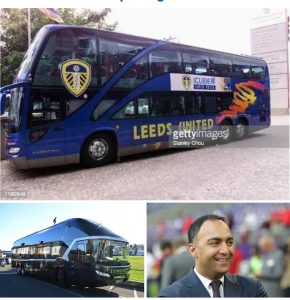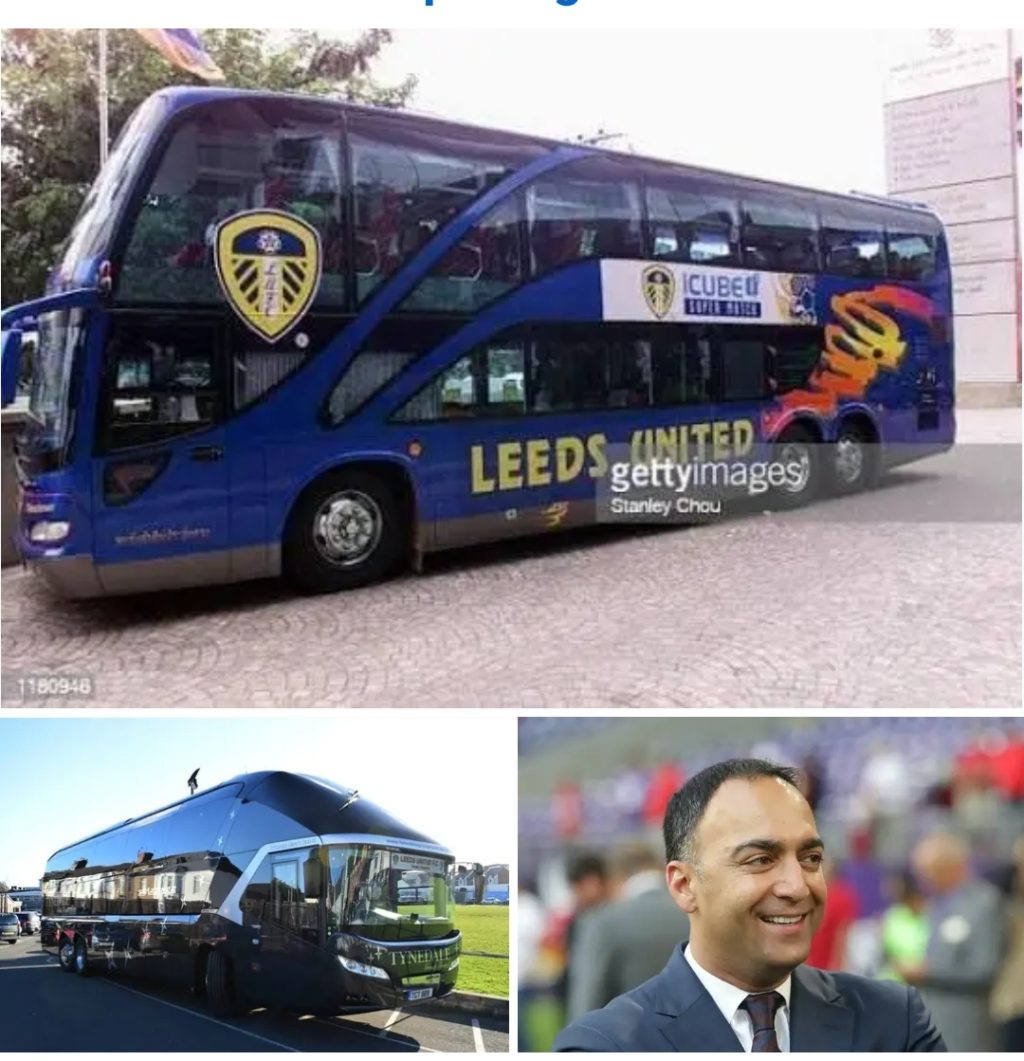
The recent decision by Paraag Marathe to donate two luxurious buses to Leeds United has sparked a lively debate among fans, analysts, and football observers. On the surface, it appears to be a generous and forward-thinking gesture—one that reflects a commitment to improving player welfare and modernizing the club’s infrastructure. However, beneath the polished exterior lies a more complex conversation: is this a sign of real ambition, or a distraction from deeper, unresolved issues within the club?
From a performance standpoint, the investment makes practical sense. In modern football, marginal gains can make a significant difference. Comfortable, high-quality travel arrangements can reduce fatigue, improve recovery, and help players maintain focus before and after matches. Elite clubs across Europe invest heavily in such details, ensuring their players operate in optimal conditions at all times. By introducing state-of-the-art buses, Leeds United aligns itself with these standards, signaling an intention to compete at a higher level. In this light, Marathe’s move can be seen as part of a broader strategy to professionalize every aspect of the club.
Supporters who view the decision positively argue that it reflects a long-term vision. Marathe, who is closely associated with 49ers Enterprises, has often emphasized sustainable growth and incremental improvement. The buses may represent just one piece of a larger puzzle—an effort to elevate the club’s culture, professionalism, and daily operations. For players, such investments can boost morale, reinforce a sense of value, and create an environment that attracts top talent.
However, not everyone is convinced. Critics argue that while luxury buses are a nice addition, they do little to address the more pressing challenges facing Leeds United. Questions remain about squad depth, recruitment strategy, managerial stability, and long-term competitiveness. For some fans, the timing of this announcement feels tone-deaf, especially if results on the pitch have been inconsistent. In their view, resources—whether financial or symbolic—should be directed toward strengthening the squad or resolving structural issues within the club.
There is also a perception that such high-profile gestures can serve as a form of distraction. By focusing attention on visible, tangible upgrades, ownership may temporarily shift the narrative away from underperformance or unmet expectations. Football fans are deeply passionate and often skeptical of what they perceive as “PR moves.” If results do not improve, the buses could quickly become a symbol of misplaced priorities rather than progress.
Ultimately, the true impact of Marathe’s decision will depend on what follows. If the investment in player comfort is accompanied by smart recruitment, strong leadership, and improved performances, it will likely be remembered as a positive step in Leeds United’s evolution. On the other hand, if underlying issues persist, critics will point to this moment as evidence of a club focusing on the wrong things.
In football, ambition is measured not just by gestures, but by outcomes. The luxurious buses may be a sign of intent—but only time will reveal whether they are driving Leeds United forward or simply taking attention off the road ahead.